
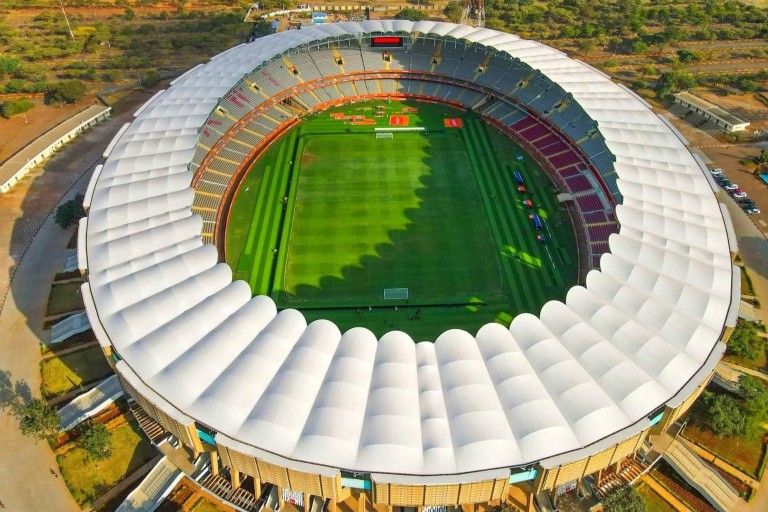
The imminent closure of the Moi International Sports Centre, Kasarani and the Nyayo National Stadium is posing a serious stadium crisis in Kenya and to the country’s top-tier SportPesa League.
As the nation’s two primary football venues undergo renovations for the Africa Cup of Nations (AFCON) 2027, the domestic game has been plunged into a state of emergency.
Already, clubs have been forced to utilize facilities in adjacent counties including Wang’uru in Kirinyaga which recently hosted the clash between Tusker and Murang’a Seal and the SportPesa Arena in Murang’a.
Kenyatta stadium in Machakos which has been used before is now in a dilapidated state but could offer some relief.

The situation is further complicated by the limited availability of the Police Sacco Stadium and the Ulinzi Sports Complex.
Despite being modern facilities, their strict military and police service rules have locked out many teams, with the biggest losers being the country’s most followed clubs in AFC Leopards and Gor Mahia.
With Nairobi alone boasting 12 out of the 18 teams in the topflight, the city’s football ecosystem is in a dire situation, seeing smaller venues like the Vapour Grounds in Ngong now forced to host top-tier matches.
However, this logistical nightmare was entirely avoidable.
The primary solution lies in a fundamental shift in how sports infrastructure is planned. Facilities should have been built with the input of CAF technical advice from the very onset.
Instead of rushing to fix errors under the pressure of a 90-day ultimatum, the government should have invited and utilized experts like CAF pitch consultant Aaron Mark Cross who was in Kenya earlier this month for a two-day inspection during the design phase.
ALSO READ: Kenya set to host first international match in nearly 2 years at Nyayo stadium

Stadium crisis in Kenya
Kenya would have avoided the costly and disruptive Phase II renovations that are currently paralyzing the league.
Furthermore, it is time for a radical rethink of county-led stadium projects. Across the country, millions of shillings have been gobbled up by ambitious but poorly executed constructions that fans have now labeled cowsheds.
Instead of chasing massive, multi-thousand-seat concrete skeletons that never seem to end, counties should focus on building high-quality, small-capacity stadiums that prioritize the playing surface and player safety over size.
The evidence of this failure is visible in the unending construction at Bukhungu Stadium in Kakamega which continues to consume millions without reaching completion.
Ironically Kakamega, a high rainfall receiving zone has seen Bukhungu Stadium fitted with a temporary artificial turf which is laughable considering the climatic conditions of the area adjacent to the tropical Kakamega Rainforest.
Similarly, projects like Ithookwe Stadium in Kitui, the Masinde Muliro Stadium in Bungoma, and the newly commissioned project in Wajir risk falling into the same trap of being grand in name but substandard in utility.
These white elephants launched by the national government and fast tracked to host national celebrations offer no relief when the national stadiums are closed because they lack the basic CAF certification required for professional play.
Ultimately, the path out of this crisis requires a marriage of expert consultation and realistic local investment. If Sports Kenya wants quality then a mandatory standard for every project should be laid.
Until then, the SportPesa League remains a guest in its own country, waiting for the gates to open on a future that could have been built years ago.
Ultimately, the 2026 stadium crisis should be remembered as the last time Kenyan football was left homeless.
The inconvenience being felt today by players changing in buses and fans being locked out of small grounds must serve as the catalyst for a new era of accountability.
We must move away from the embarrassment of 90-day CAF ultimatums and toward a future where our stadiums are a source of daily pride, not just temporary sets for a three-week tournament.
True success for Kenyan football will not be measured by the architectural beauty of Talanta Sports City, but by the consistent quality and availability of pitches from Mombasa to Kakamega long after the international cameras have left.