
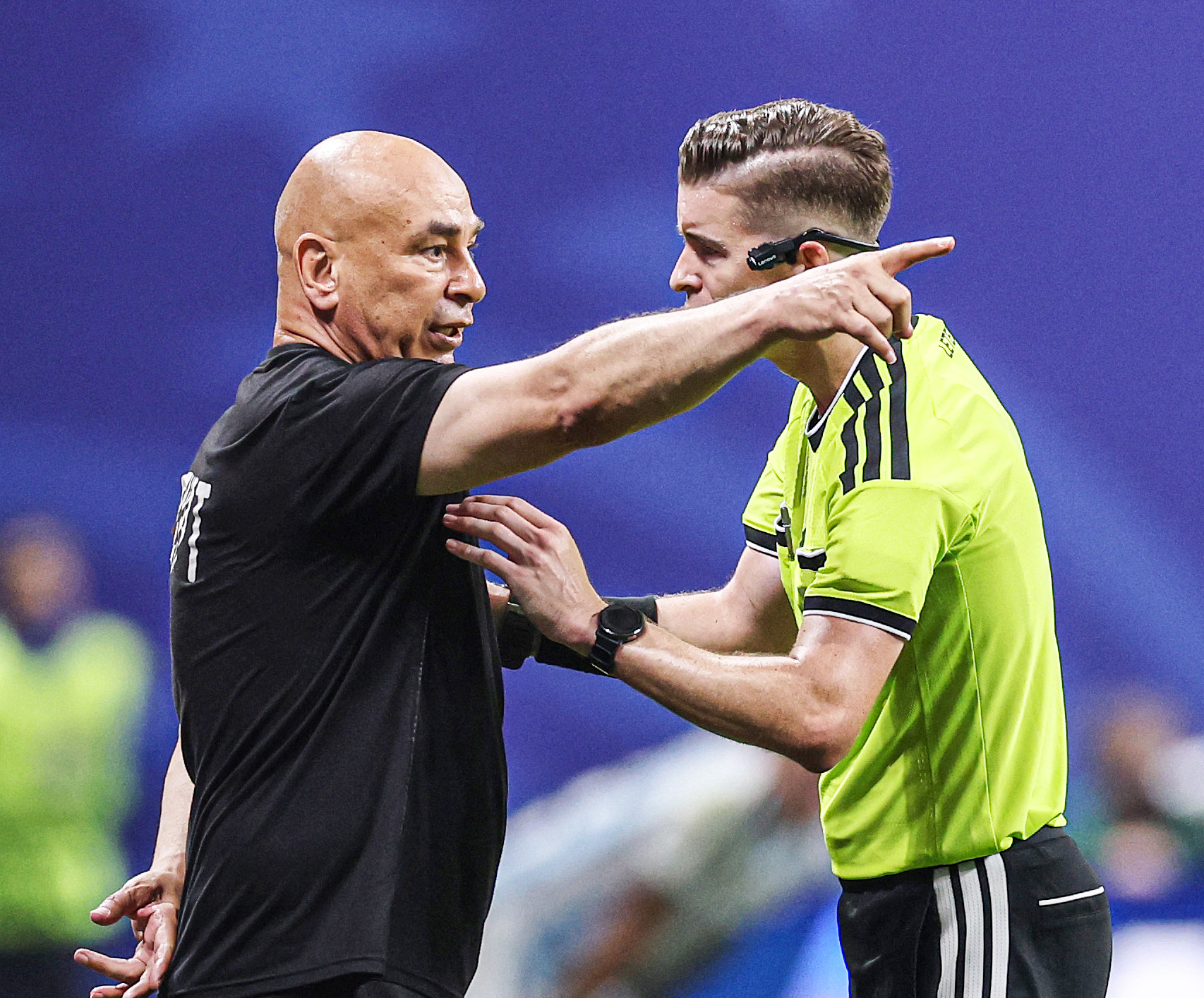
Egypt coach Hossam Hassan did not hold back in his assessment of his side’s heartbreaking 3-2 FIFA World Cup Round of 16 defeat to Argentina, insisting that poor officiating and external influences denied his team a place in the quarter-finals.
Hassan watched his side surrender a two-goal advantage before Argentina completed a dramatic comeback, but the veteran coach believes the outcome was determined by more than just football.
ALSO READ:Argentina vs Egypt: Messi inspires Argentina’s epic fightback to end Egypt’s World Cup fairytale
Speaking after the final whistle, he described the defeat as an “injustice” and questioned several key decisions made by the match officials.
“We looked better than the reigning champions; better in everything,” Hassan said. “But the result was influenced by internal factors on the pitch and external factors off it. Perhaps they wanted to keep the world champions in the competition. Perhaps they wanted Messi to stay in the running.”

The Egyptian tactician argued that his players produced a performance worthy of progression, claiming his side matched and even outplayed the defending champions for large periods of the contest. However, he felt crucial refereeing calls completely shifted the momentum in Argentina’s favour.
“In football, there are sometimes external factors that go beyond the technical aspects,” he continued. “The world champions received support at every level.”
Much of Hassan’s frustration centered on the decisions of French referee François Letexier. Egypt had a goal ruled out after a VAR review, while the coach was equally angered that an alleged foul by Alexis Mac Allister in the build-up to Enzo Fernández’s stoppage-time winner was not reviewed.
“There seem to be pressures from the Argentina side on this outcome,” Hassan said. “We were objecting to the selection of the referee because of the French situation, but everybody has to suffer at some point, and we suffered.”
He also questioned why Egypt’s appeals for a penalty involving captain Mohamed Salah were ignored.
“We haven’t seen respect or fair play. A penalty was ruled out. It was not even checked by VAR, and our second goal was remarkably, for whatever reason, disallowed.”
Despite trying to remain composed, Hassan admitted the emotions of the occasion made it difficult to accept the result.
“I want to put it in beautiful words and say, ‘Hard luck,’ but we have been treated unfairly and it has been an injustice,” he stated.

The coach’s frustration spilled over after the final whistle when he confronted referee Letexier. Hassan later revealed what was said during the exchange.
“What I told the referee was, ‘This is unfair.’ I said maybe he is carrying a scar or has something to hide. If somebody is trying to hide something, they often fail to hide it.”
Although Egypt’s World Cup journey ended in painful fashion, Hassan refused to criticize the effort of his players. Instead, his post-match remarks focused almost exclusively on what he viewed as decisive officiating errors that overshadowed an otherwise outstanding performance from his team.
His comments are likely to spark debate across the football world, with Egypt feeling they were denied a fair opportunity to eliminate the reigning champions. While Argentina marched on to the quarter-finals, Hassan left Atlanta convinced that his side’s exit was determined by controversial decisions rather than what unfolded between the two teams on the pitch.
Read more about other World Cup teams in 2026 below:
Morocco national football team 2026
Argentina national football team 2026
Mexico national football team 2026
Spain national football team 2026
Brazil national football team 2026
France national football team 2026
Senegal national football team 2026