
Kenya’s athletics pride has once again taken centre stage on the global map, but back home, the reaction has sparked a different kind of conversation, one that questions national priorities and media focus.
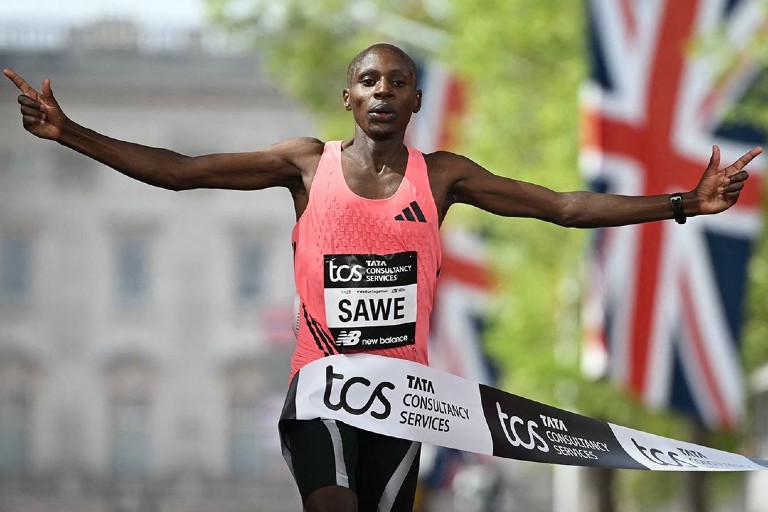
When Sabastian Sawe etched his name into history on Sunday, April 26, 2026, the world stood still. The 31-year-old produced a performance for the ages, becoming the first human to run a marathon in under two hours, clocking an astonishing 1:59:30 on the streets of London.
It was a feat that transcended sport, redefining human limits and cementing Kenya’s dominance in long-distance running.
ALSO READ: How Kenya’s Sabastian Sawe made marathon history in London

Sawe’s return to the country was nothing short of heroic. Upon arrival at Jomo Kenyatta International Airport on Thursday morning, he was welcomed with a ceremonial water salute ; an honor reserved for extraordinary achievements.
His day culminated at State House, where President William Ruto rewarded him with KSh 8 million, a brand-new car, and a customized number plate reading “1:59:30” in tribute to his historic run.
Globally, Sawe’s achievement dominated headlines. International media houses splashed his victory across their front pages, dedicating columns and airtime to celebrate a moment that will be remembered for generations. However, back in Kenya, the narrative appeared strikingly different.
Kenyan leaders question media snub of Sabastian Sawe’s historic marathon run
Elgeyo Marakwet Woman Representative Caroline Jeptoo during a parliament session did not hold back in her criticism of local media, accusing them of sidelining a historic sporting milestone in favor of political stories.
“The burning issue is that the day Sebastian Sawe broke the world record, all the newspapers and leading media houses in the world made him the headline, except the Kenyan newspapers, whereby politics were the headlines,” she lamented.
“I want to urge the media houses in Kenya to be patriotic and at least learn to appreciate the young, upcoming people of Kenya. It shouldn’t be about politics for 24 hours.”
Jeptoo expressed disappointment that the country did not collectively pause to celebrate such a monumental achievement.
“I was expecting everything in Kenya to come to a standstill and celebrate him, just the way it happened at Jomo Kenyatta International Airport and even at State House,” she added.
Her sentiments were echoed by Baringo Woman Representative Florence Jematiah, who called for a more structured and consistent approach in honoring Kenyan sports heroes.
“The ministry should look back into celebrating most of our sportsmen and women who have done marvelous things for the country by congratulating and glorifying them every day,” she said.
“They have made our national anthem to be sung on big stages, which is not an easy feat. I celebrate and congratulate our star of the year 2026, Sebastian Sawe.”
The debate raises a broader question about national identity and recognition. In a country renowned for producing world-beating athletes, moments like Sawe’s sub-two-hour marathon are rare and historic. They not only elevate Kenya’s global standing but also inspire future generations.
Yet, as leaders point out, the celebration of such milestones must begin at home. Because while the world may applaud, it is the nation’s responsibility to ensure its heroes feel that applause the loudest where it matters most.