
In Rabat, Morocco
Travelling from Nairobi headed north for my maiden Africa Cup of Nations (AFCON) 2025 tournament in Morocco, I had a lot of expectations on a country chosen as one of the hosts for the FIFA World Cup 2030 alongside Portugal and Spain.
World class stadiums. Immaculate security. Incredible organization. Top notch marketing. Die-hard fanbases.
Lastly, I prayed for good internet. Honestly.
ALSO READ: Africa Cup of Nations 2025: Dates, fixtures & everything to expect in Morocco

Being a media practitioner in a fast-evolving digital landscape, I hoped the internet data would be affordable and really fast.
In August 2024, whilst in South Sudan covering Gor Mahia’s CAF Champions League Preliminary Round clash against Al Merreikh Bentiu at the Juba National Stadium, my producer had to leave the stadium and go back to the hotel room just to upload content while I prayed facing the South to appease the internet gods as I sent other content.
In a way, it worked. But the experience was testing to my already not so ideal patience levels.
In the continent’s biggest football event, I hoped the experience would be much better.
Upon arrival just in time for Morocco’s opener against Comoros, everything I had in mind was sufficiently met and exceeded by far.
The newly opened 69,000-seater Prince Moulay Abdallah Stadium was a thing of beauty and the security, organization and fan base was top notch as the hosts marched to comfortable 2-0 win.
ALSO READ: Morocco make statement win against Comoros as AFCON 2025 gets underway
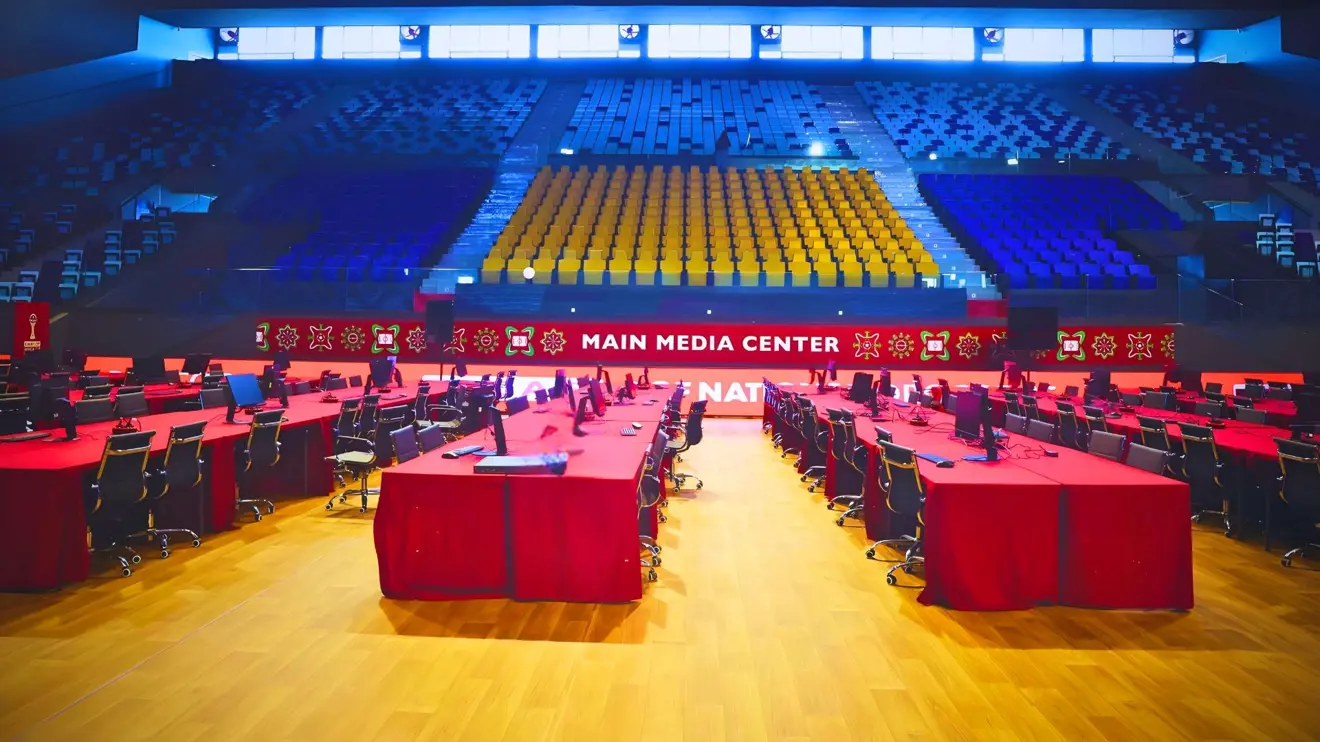
Cue the main media centre hosted in Rabat. It literally swept me off my feet.
The facility located at the Salle couverte du complexe sportif Moulay Abdellah has a capacity that can cater for up to a mind boggling 2,000 media practitioners.
The arena is a futsal court that has been customized into a state-of-the-art media centre catering for all categories of media including tv, radio, print, photographers and content creators.
It is also fitted with high-speed internet connectivity, comfortable working desks, printers, lockable storage, giving journalists a little heaven on earth to retreat to while chipping away on their desks.


The level of preparation into providing the facility left the journalists with nothing but praise for the organizers from CAF and the hosts.
“The media centre is very good and very well furnished. It also has a lot of space to work and very well organized. The CAF team and the Rabat team did very well so that the journalists can do their work.
I do a lot of NBA (basketball) which is very big in the United States but this media centre is easily in my top 3 positions,” US-based Lina Labiad from Paris Match told SportPesa Blog.
“It is such a high-level media centre and probably one of the best I have ever seen in AFCON.
Everything is available to produce good work and what is amazing is that it is inside a sports arena which makes it sports oriented and encourages us to produce good work,” French-based Patrick Juillard from Football 365 said.
ALSO READ: Semenyo, Onana lead contingent of stars set to miss AFCON 2025 in Morocco
With the tournament set to be co-hosted by Kenya, Uganda and Tanzania in 2027, Uganda’s David Isabirye sounded out an early alarm to the East African trio ahead of staging their event.
“To be sincere, for such a tournament to have an international media centre is really good planning and the organizers in the Kingdom of Morocco and CAF take the credit. All the facilities are there in is this venue which makes our work easy.
I have visited so many media centres and journalists are normally taken as a second thought. For East Africa that is going to host AFCON 2027, the bar has been set. We cannot come below the standard and on a scale of 1-10 I will give it 8,” Isabirye stated.

Kenya’s sports journalists Silva Kido and Paul also praised the media centre in Rabat, hailing it as the best so far in their career.
“This media centre has met international standards. It is equipped with modern facilities and even a media lounge. To me, this is the best media centre I have worked in,” Kido said.
The AFCON Morocco 2025 Main Media Centre is well organised and journalist-friendly. It offers reliable internet, comfortable working spaces and a system with working computers and printers making it easier to file stories and conduct broadcasts.
The centre also brings together journalists from across Africa and beyond, creating a professional and vibrant working environment that reflects Morocco’s readiness to host a world-class tournament,” Paul concluded.
The Africa Cup of Nations will see 24 teams battling to be crowned African champions from 21 December 2025 to 18 January 2026.