
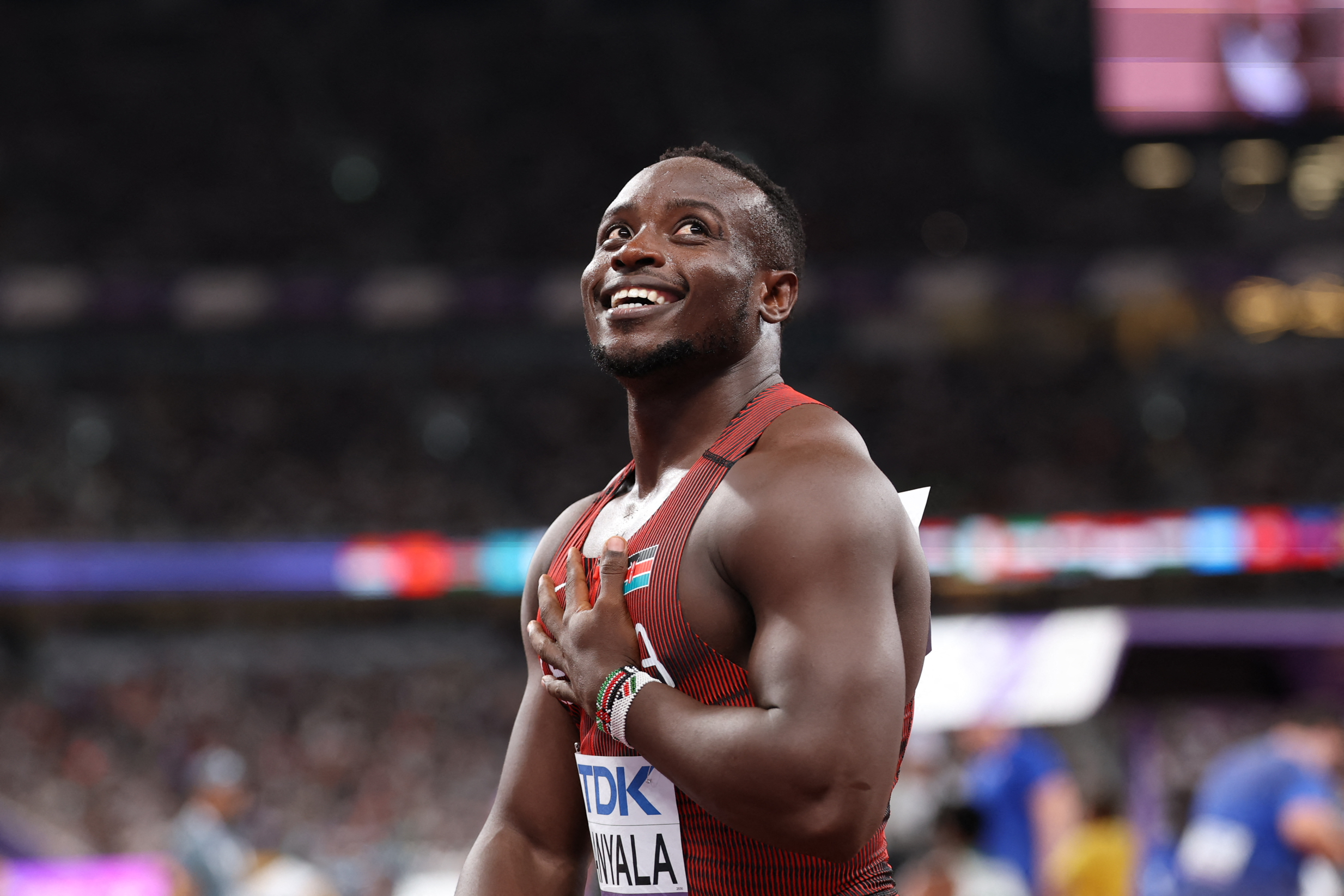
Africa’s fastest man Ferdinand Omanyala has challenged the Kenyan government to rethink its approach to supporting athletes, arguing that the current system does little to help competitors prepare adequately for major international championships.
Kenya has established itself as one of the world’s leading athletics nations, producing generations of champions who have carried the country’s flag high on the global stage.
From Kipchoge Keino, Catherine Ndereba and David Rudisha to Eliud Kipchoge and the current generation led by Omanyala, Kenyan athletes have consistently delivered memorable performances and brought international recognition to the country.
However, behind the medals, records and celebrations lies a demanding journey that requires significant financial investment, something Omanyala believes should not be left entirely to individual athletes.

Ferdinand Omanyala challenges government support system
Speaking in an interview with DW, the Commonwealth Games 100m champion criticised what he considers a reactive approach by the government where support is often provided only after athletes have qualified for national teams rather than during the crucial preparation period.
According to Omanyala, the government should identify promising athletes early and invest in their development instead of waiting for them to prove themselves at trials before offering assistance.
“They come in when they need to. Because they only need you when you have done trials and then you have qualified to get into the teams. And that’s when they come in and support.
I wish it were different because, let’s take an example, we are having the Olympics in two years. I am sure by now we know they are probables, so why don’t we just support these guys for the two years and just, you know, qualified or not qualified, let’s put them in that camp and grow them,” Omanyala said.
Click here to register as a SportPesa customer
The 30-year-old sprinter, who holds the African 100m record of 9.77 seconds, knows what it takes to compete at the highest level. He has represented Kenya at the Olympic Games, reached the World Athletics Championships final in 2022 and won gold at the 2022 Commonwealth Games in Birmingham.
Despite his achievements, Omanyala revealed that maintaining his position among the world’s fastest sprinters comes with enormous financial demands, much of which athletes have to meet from their own pockets.
He disclosed that a review of his expenses with his management team shortly after the 2026 season revealed that they had spent approximately 5 million shillings on flights, medical treatment, physiotherapy, accommodation and other preparation-related expenses.
“We were doing an invoicing with my manager like three weeks back just after the season. This year, we’ve spent a couple of around 45,000 USD on flights, on treatments, on physios, on accommodations and all that stuff. So you can imagine that’s a lot of money to stay at the top,” he added.

Omanyala also pointed to the experience surrounding Kenya’s participation in the World Athletics Relays in Botswana as an example of the challenges athletes face when government support is delayed.
He revealed that athletes were initially asked to travel and compete with assurances that their allowances would be paid afterwards. However, they had to wait three months to receive 45,000 shillings for three days of competition.
“Just recently we were going for the World Relays. And it was in Botswana. So we went. They told us, you guys go and perform. go and compete. We will pay your allowances after. So it took three months to wait for 45,000 for the work for three days.” he said.
The sprinter further explained that the financial burden forces athletes to find alternative sources of income to sustain their careers, even as they continue representing the country at international competitions.
He questioned whether the financial rewards available to athletes after making an Olympic team are sufficient to cover the enormous costs of preparation throughout an entire Olympic cycle.
To all who still believe in this journey. Thank you! https://t.co/WCYMfUiqfK— Ferdinand Omurwa OMANYALA M.B.S,O.G.W (@Ferdiomanyala) April 25, 2026
Omanyala, however, insisted that athletes should not make government support the foundation of their careers, but rather treat it as an additional boost.
“But then it has been tough. Like I said, I tell the athletes, and I’ll say it here, that let the government backing be a bonus,” he stated.
His remarks raise an important question about Kenya’s approach to athletics development. With the country continuing to produce world-class talent, early investment, reliable funding and proper preparation structures could go a long way in helping athletes compete consistently at the highest level.
ALSO READ:Kenya’s Rising Lionesses stun Australia to clinch historic gold at Dakar Youth Olympics