
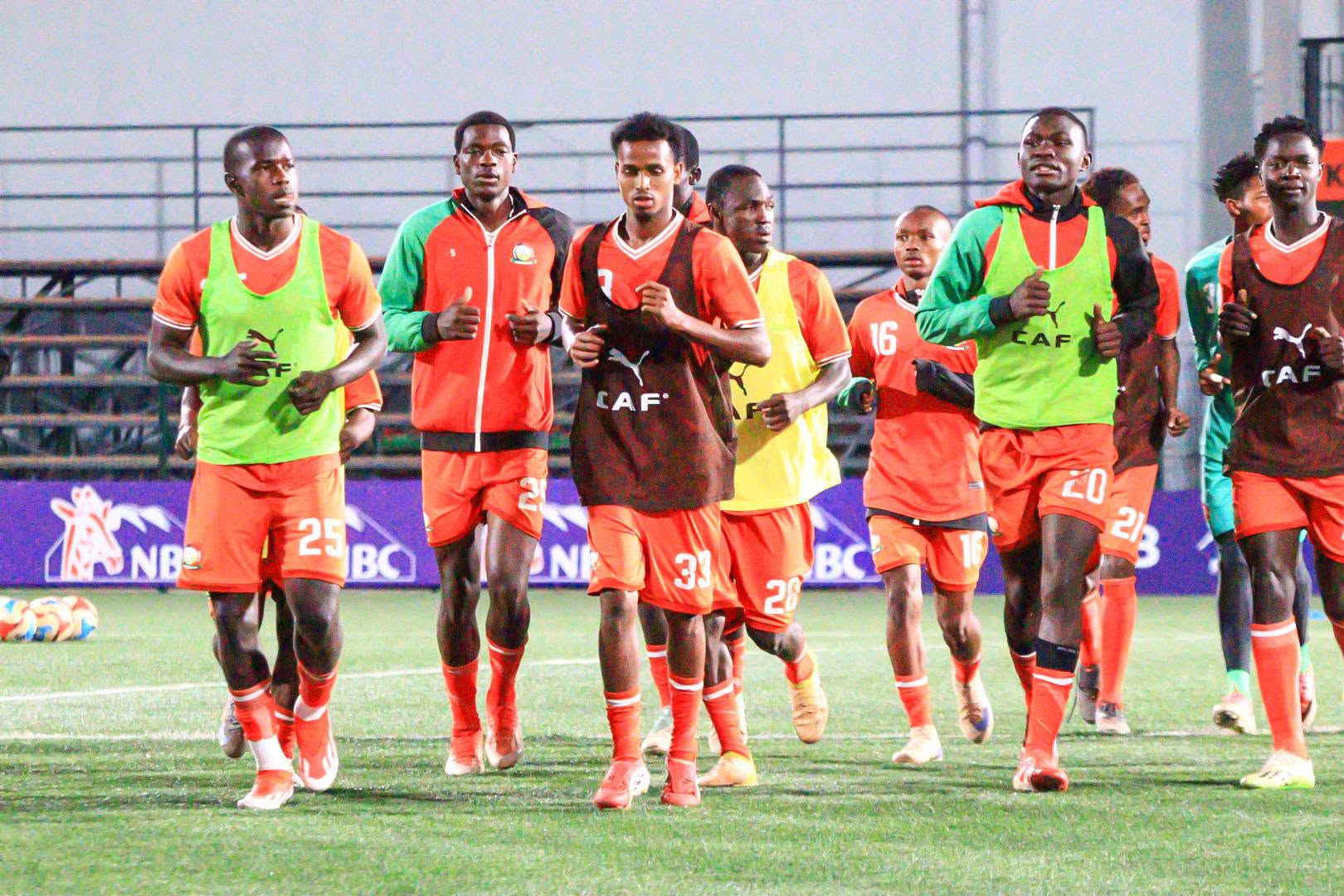
Kenya U20 head coach Gilbert Selebwa has opened up on some of the challenges that contributed to the team’s disappointing showing at the ongoing AFCON U20 CECAFA Zonal Qualifiers.
The Junior Stars were unable to register a win in the competition, suffering a 2-0 defeat to Burundi in their opening Group A match before settling for a 1-1 draw against South Sudan in their second outing.
Kenya’s campaign got off to a difficult start against Burundi, with Amini Nshimirimana scoring twice to hand the Burundians a comfortable victory. Nshimirimana opened the scoring in the 10th minute before completing his brace in the 70th minute, leaving Selebwa’s charges with the task of getting a result against South Sudan.
However, the Junior Stars once again failed to pick up maximum points. South Sudan took the lead through Jonathan Ajoung in the 26th minute, putting Kenya under pressure for much of the contest. Kakamega School midfielder Brighton Nacheri eventually rescued a point for Kenya with a late equaliser, but the result was not enough to keep their qualification hopes alive.
The outcome was a major disappointment for Kenya, especially considering that the previous edition had seen the country qualify for the AFCON U20 after finishing second in the CECAFA zonal qualifiers.
For Selebwa, however, the circumstances surrounding the current squad need to be taken into consideration. The coach was handed the responsibility of guiding the team only weeks before the tournament, while a large number of players from the previous U20 side had already graduated to the U23 level.

Selebwa explained that the lack of continuity between the different youth national teams has made it difficult to build a settled squad capable of competing at this level.
“I think what people need to understand is that building a team is a process. This is the first time that I am handling the national team,” Selebwa said after the 1-1 draw against South Sudan.
The Michael Olunga Football Academy head coach pointed out that a majority of the players who featured for Kenya in the tournament were experiencing this level of international football for the first time.
“This is the first time 70 per cent of the players who played today have played at this level. Therefore, a lot was expected from us, I know that, but if you look at the way we picked the players, almost 90 per cent of those who played in last year’s AFCON U20 are not within the team because they have now moved from the U20s and are with the U23s,” he added.

The former AFC Leopards coach believes Kenya needs to develop a more structured pathway that allows talented players to progress through the youth national teams instead of rebuilding squads whenever players graduate from one age group.
Selebwa called for the establishment of what he described as a “conveyor belt” that would see players introduced to the national setup at U15 level before progressing through the U17 and U20 teams.
“So we are looking at a situation whereby, can we be able to have a conveyor belt where we can be able to say that we have a group of players who started as U15s, progressed to the U17s and then they progress to the U20?” he posed.
According to the former Mombasa United head coach, such a system would also require the right coaches to be involved at the different stages of a player’s development.
“I think maybe that’s what we are lacking at this particular point. I think we will address it upon the big shots taking care of football in Kenya, that we can be able to have a conveyor belt from 15, 17 and 20 and then have the right kind of coaches go down there to be able to at least groom these players,” he said.
Selebwa believes implementing such a structure could bring about significant changes in the development of Kenya’s youth teams.
“I think there’s going to be a paradigm shift as far as the youth teams in Kenya are concerned,” he concluded.
With Kenya’s hopes of reaching the AFCON U20 finals now over, attention will turn to how the country can strengthen its youth development structures and ensure that future U20 squads benefit from greater continuity and preparation.